
Oakville Roofers
Storm & hail damage repair for Oakville roofs
Thorough storm inspections and repairs across Oakville neighbourhoods — email us for a detailed assessment
Email Us for a Free Estimate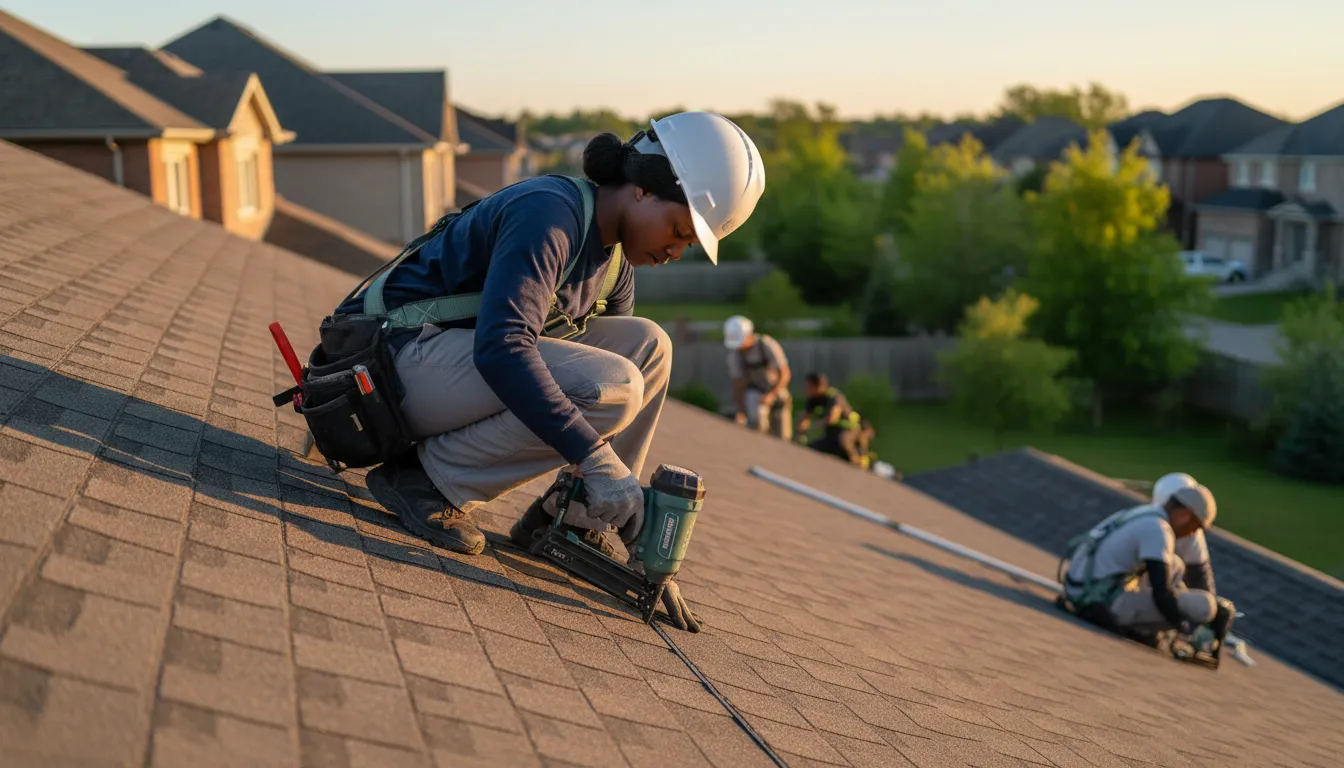
The problem Storm & hail damage repair solves
Storms in Oakville produce two principal mechanical failures: impact-induced membrane bruising and wind-driven uplift. Hail strikes compress the asphalt mat and displace protective granules without always breaking a shingle — that bruise is a weakened zone that admits UV and water intrusion over months. Wind uplift pries at shingles from the nail line and flashing junctions, exposing underlayment and nail penetrations; left unaddressed, uplift leads to seam failure, water infiltration at the sheathing, and potential rot in the roof deck and framing. These failure mechanisms are often hidden, and secondary damage can far exceed the initial visible loss.
How Oakville Roofers addresses those failures
Oakville Roofers uses a methodical inspection protocol: climb-access evaluation, digital photos of impact patterns, and tactile checks for boarded or brittle underlayment and loose fasteners. Repairs start with removing compromised shingles or metal panels, replacing damaged underlayment with a high-temperature synthetic underlay where appropriate, and restoring step and continuous flashings in lead-look or metal options compatible with the existing system. We lace new shingles into existing courses to maintain wind-resistance and use ring-shank nails or recommended fasteners at proper penetration lengths to resist subsequent uplift. For hail-damaged metal elements, we replace or re-form flashing sections and inspect adjacent components like vents and gutters for transferred impact.
Request a no-obligation storm inspection and written assessment for your Oakville property
Email Us for a Free EstimateSigns You Need Storm & hail damage repair in Oakville
Recognising the early signs of storm and hail damage avoids larger failures. Below are common symptoms we see in Oakville homes and what they indicate about the roof assembly underneath.
Missing or lifted shingles
Shingles that are missing or visibly curled at the edges often indicate wind lift or compromised nail adhesion. Underneath, nail pull‑through or degraded roofing felt can allow water to run under the covering and rot the sheathing.
Granule loss and bare spots
Large patches of granule loss on asphalt shingles suggest hail impact or accelerated wear from UV and abrasion during storms. Exposed matting loses weather protection, shortens the shingle life, and increases risk of moisture ingress.
Dents in metal flashings or panels
Dent patterns on metal flashings, gutters, or metal roof panels point to hail impact; dents can compromise lap joints and create channels for water. Corrosion can start in dented areas if protective coatings are breached, reducing the long‑term serviceability of the metalwork.
Bruised or dimpled shingles on close inspection
Shingle bruising appears as dimples that may not be visible from the ground but weaken the shingle’s granule adhesion and waterproofing. Bruising often precedes cracks that let water pass through the shingle into the underlayment.
Damaged or uplifted ridge and soffit vents
Storms can dislodge ridge caps and soffit vents, disrupting attic ventilation patterns and creating condensation risk. Poor ventilation encourages moisture accumulation in insulation and can lead to mould growth and sheathing deterioration.
Water stains or active leaks inside
Ceiling stains, damp insulation, or visible drip lines inside the attic signal that the roof assembly has failed somewhere above. These symptoms often mean the underlayment or flashing has been compromised and immediate investigation and repair are needed.
Blocked or damaged eavestroughs and downspouts
Gutters clogged or dented from hail and debris can cause water to back up under eaves and feed into soffits and fascia. Extended ponding near roof edges accelerates rot in fascia boards and undermines roof decking.
What to Consider Before Booking Storm & hail damage repair
Is my roof old enough that replacing is a better option than patching?
Age and remaining service life are central to the decision. If the roof is past the midpoint of its expected service life for the installed material — for example, laminate architectural asphalt nearing 15–20 years — a storm that causes significant local damage often makes replacement the more economical, performance‑based choice. A targeted patch is reasonable when the roof has years of dependable life left and damage is isolated.
How quickly do I need an inspection after a storm?
Inspect within the insurer’s claim window and before spring thaw if winter storms are involved; hail damage is often subtle from the ground and can be missed. Early inspection captures the cause and evidence before repairs or weathering obscure impact marks and preserves options for insurance documentation.
Can I choose cheaper materials for a temporary fix?
Temporary fixes may be appropriate if you plan full replacement in a short timeline and need to stop active leaks; tarps, temporary underlayment patches, and isolated shingle replacements can bridge until a full job. For long‑term repairs we recommend materials that match the existing assembly’s expected life—mismatched materials can create weak points and reduce overall longevity.
Will the repair disrupt my household or yard?
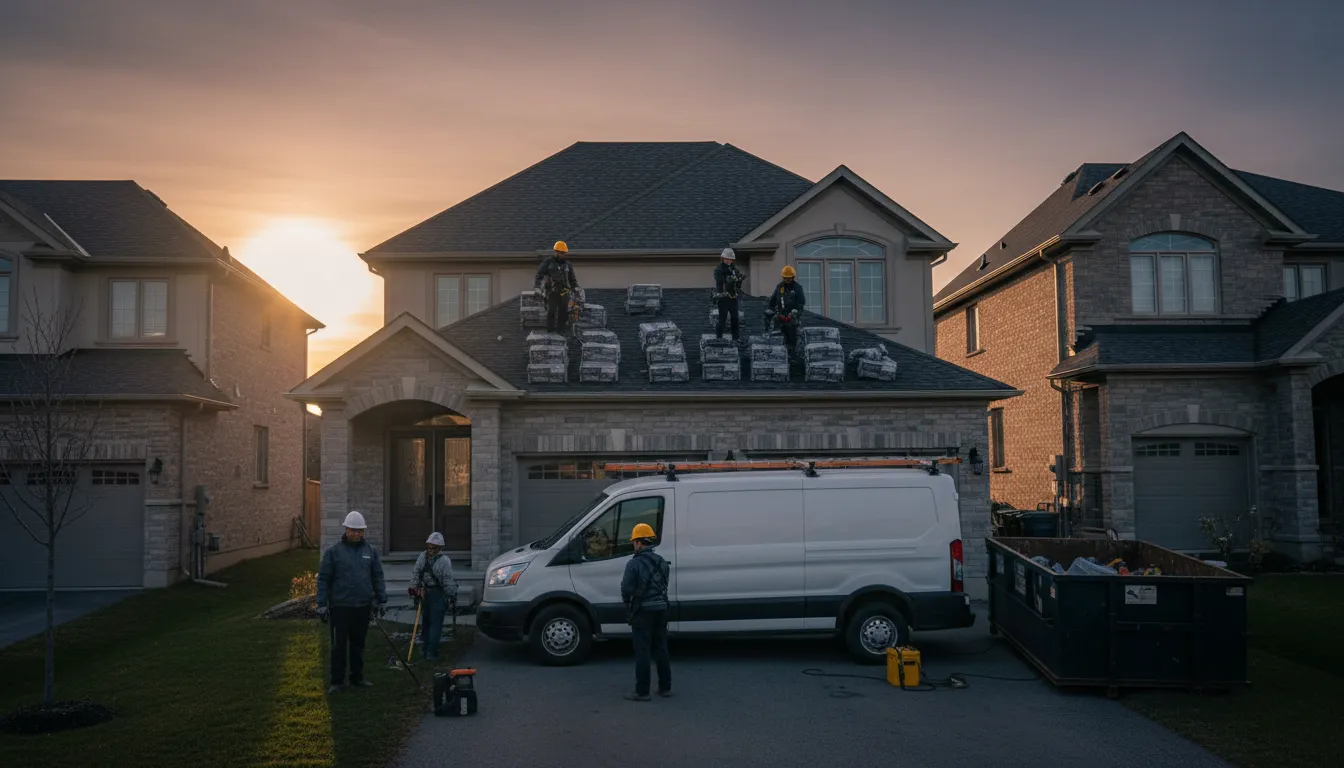
Repairs require access to the roof and sometimes to eaves and downspouts, so expect scaffolding, ladders, and debris staging in the driveway. For limited repairs we minimise disruption with point‑access setups; full re‑roof projects need more space for materials and disposal bins. We schedule work to limit interference with your daily routine.
Do I need permits or inspections in Oakville?
Some larger repairs or full replacements trigger municipal permit requirements; local building departments in Halton County set rules for replacement work and ventilation standards. Small, isolated repairs often do not need a permit, but we confirm requirements during the written scope stage and note them in the quote.
How do I balance cost and long‑term performance?
Consider lifecycle cost rather than lowest upfront price: cheap materials or fast, minimal repairs can lead to recurring problems and more aggregate expense. Oakville Roofers provides an itemised comparison of options—repair now, partial replace, or full replacement—so you can weigh initial cost against expected future maintenance.
How much does Storm & hail damage repair cost in Oakville?
Cost depends on the roof’s size and slope, the extent of visible and concealed damage discovered during inspection, the materials selected (e.g., architectural asphalt shingles versus metal flashings), and access complexity such as multi‑storey work or constrained yards. Labour rates, disposal of old materials, and any required replacement of decking or ventilation also affect price. Oakville Roofers provides a written, itemised quote after an on‑site assessment and documents the likely contingent items so insurers and homeowners can see the basis for cost.
How long will repairs take after assessment?
Minor repairs—replacement of a few shingles or a damaged flashing—are often completed within a day or two of scheduling. More extensive work, like partial re‑roofs or full replacements, can take several days depending on weather windows, material lead times, and the need for municipal inspections. We include expected timelines in the written quote and update via email if conditions change.
What materials and options are available for repairs?
Common options include architectural asphalt shingles on plywood or OSB decks, metal panel repairs for low‑slope roofs, integrated ice and water barriers in eaves, and synthetic underlayments for enhanced water resistance. Each material choice has trade‑offs: asphalt shingles balance cost and service life, metal offers durability but higher upfront cost, and self‑adhering membranes protect vulnerable eaves and valleys.
Do I need a permit or inspection for the repair?
Small patch repairs usually do not trigger a municipal permit in Oakville, but full re‑roofs and any work that alters structural elements or ventilation typically require permits and an inspection. We identify permitting needs during the written scope stage and note them in the quote so you can plan for inspection timing and approvals.
What warranty or guarantee comes with repairs?
We provide a workmanship guarantee that covers installation defects described in your scope; the guarantee terms are documented in writing and tied to the completed work. Material manufacturers may provide separate warranties for shingles and metal components; we document these and include the manufacturer warranty details where applicable.
How should I prepare my property before crews arrive?
Clear vehicles and move patio furniture away from the work area, and secure pets inside. If you have satellite dishes, solar panels, or rooftop equipment, notify us in advance so we can plan access and protection; we document these items in the scope and coordinate placement with you via email.
Why do quotes differ between contractors for the same damage?
Quotes vary because contractors may make different judgements about underlying damage, the scope of work, permitted materials, and the quality of installation methods. Some quotes prioritise low initial cost with minimal repairs; others price for robust, code‑aligned solutions and include attic checks, proper fasteners, and ventilation fixes. Oakville Roofers’ quotes explain the technical rationale so you can compare apples to apples.
Our Storm & hail damage repair Process in Oakville
We follow a documented process that separates diagnosis from prescription and provides the paperwork insurers require. Each step focuses on building‑performance outcomes.
- 1
On‑site assessment and photo documentation
We inspect the roof from multiple angles, access the attic to check interior evidence, and photograph all damage and systemic issues. Observations are recorded with reference to the specific roofing assembly, fastener types, and ventilation condition.
- 2
Written scope and insurance documentation
From the assessment we prepare an itemised scope and condition report for you and your insurer that lists materials, quantities, and the observed failure mechanisms. Photographs and annotated notes accompany the scope to support cause and extent claims.
- 3
Scheduling and material selection
We coordinate timing with Oakville municipal guidelines and seasonal considerations, selecting materials—synthetic underlayment, self‑adhering ice and water shield, architectural asphalt shingles, metal flashings—matched to the roof system. We email the schedule and materials list so you know what to expect on site.
- 4
Execution with property protection
During repairs we use ladder protection, roof edge tarps, magnet sweeps, and containment to protect landscaping and gutters. Repair work follows building‑practice methods: proper fastener placement, correct underlayment laps, and sealed flashings to restore the assembly’s watertight integrity.
- 5
Final walkthrough and documentation handover
We conduct a final walkthrough with the homeowner and email a completion package containing before/after photos, the final invoice, and the documentation required for claim settlement. We also note any recommended follow‑up maintenance like ventilation adjustments or gutter clearing.
Professional Storm & hail damage repair Built for Oakville Conditions
Oakville’s climate and housing mix shape how storm and hail repairs should be done. We design repairs that address root causes — wind uplift, hail impact, and freeze‑thaw cycling — rather than only treating visible damage. Our work covers both residential roofs across Oakville neighbourhoods and lighter commercial roofs where impact vulnerability differs due to slope and material. All recommendations reflect local practice and the likely performance life under Oakville conditions.
Ontario weather stresses and repair priorities
Oakville experiences spring storms, summer hail, and lake‑influenced winds that cycle temperatures and stress roof assemblies. Repairs must account for thermal expansion, nail set‑back from repeated freeze‑thaw, and the potential for hidden underlayment failure. We prioritise repairs that reestablish continuous drainage planes and ventilation to avoid accelerated degradation.
Local housing stock and material choices
Oakville has older homes with cedar or metal accents and newer builds with architectural shingles; each material has distinct repair methods. Asphalt laminate shingles are common and repairable with like‑for‑like replacements and proper flashing; metal panels require dent repair or panel replacement with matching profiles and fasteners. We select materials that match local profiles for durability and visual integration.
Code and permit context in Halton County
Building code requirements influence ventilation, ice‑shield installation at eaves, and minimum underlayment standards for replacement work. While small repairs often avoid permits, full re‑roofs are subject to municipal inspection and code compliance; our scopes factor these requirements and we note permitting needs in the written quote.
Workmanship standards and testing
We follow proven installation practices: correct nail length and placement, adhesive use on ridge caps where specified, and self‑adhering membranes in critical valleys. Post‑repair, we verify flashing seals and attic dryness to confirm that the repair addressed the observed failure mechanism rather than masking the symptom.
Weather is hard on your roof — email us for a same-day inspection.
Fall roofing conditions in Oakville, ON
Fall is the critical prep window around Oakville, ON: clear gutters, reseal flashing, and fix loose shingles before freeze-thaw and snow load arrive.
Proudly Serving Oakville, ON
Local, on-time service throughout Oakville and the surrounding area.