
Oakville Roofers
Roofing Built for the Load Cases Peel Region Actually Sees
From the mixed-vintage streets of Mississauga and Brampton to the estate lots north of Caledon, we assess each roof against its real exposure: snow load, wind uplift, and the thermal cycling that Southern Ontario winters impose. Request a quote by email and receive a written scope before any work begins.
Email Us for a Free Estimate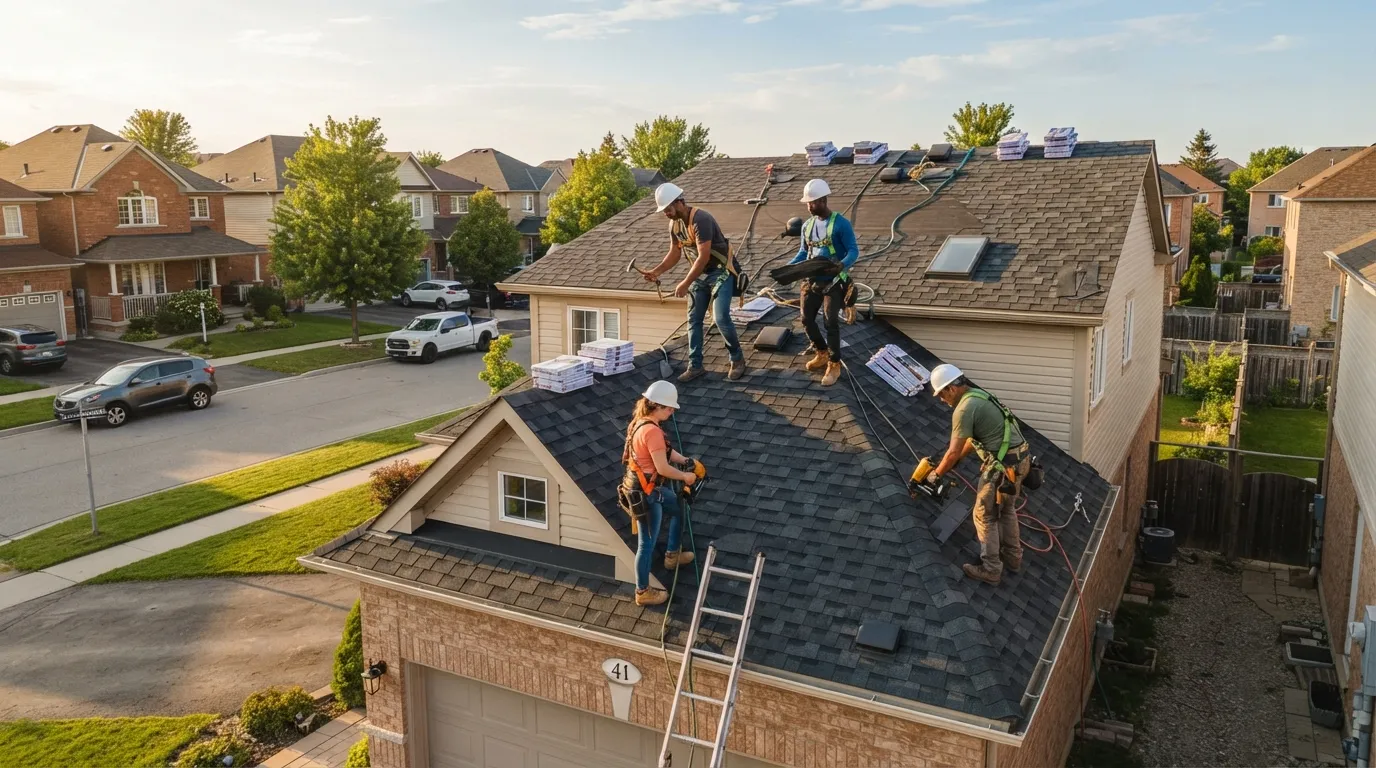
The Engineering Case for Peel Region
Peel Region spans a wide range of construction eras, from postwar bungalows in older Mississauga wards to production-built subdivisions in Brampton and larger custom builds in Caledon. Each era brings a different set of roof assemblies, and a competent inspection has to account for the differences rather than apply a single template.
Mixed Housing Stock
Older Peel homes often carry plank decking and minimal soffit ventilation, while newer builds use OSB decking with engineered trusses. We identify which assembly is present before recommending underlayment or ventilation upgrades, because the correct fix for one is often wrong for the other.
Snow Load and Drift Patterns
Peel's open subdivisions and taller Caledon roof pitches see uneven snow drift accumulation, particularly against parapet walls and dormers. We check for undersized rafters or sagging ridge lines that indicate the structure is already working near its limit.
Freeze-Thaw Cycling
The repeated freeze and thaw common to this part of Ontario drives ice formation at eaves and valleys. Where ice damming has occurred previously, we look for compromised deck fasteners and delaminated sheathing before any new membrane goes down.
Regional Storm Exposure
Peel Region sits in a corridor that regularly receives severe summer thunderstorm cells with hail and straight-line wind. We evaluate shingle wind ratings and fastening patterns against that specific exposure rather than a generic wind-zone assumption.
Why Roofs Fail Faster in Mixed-Density Peel Neighbourhoods
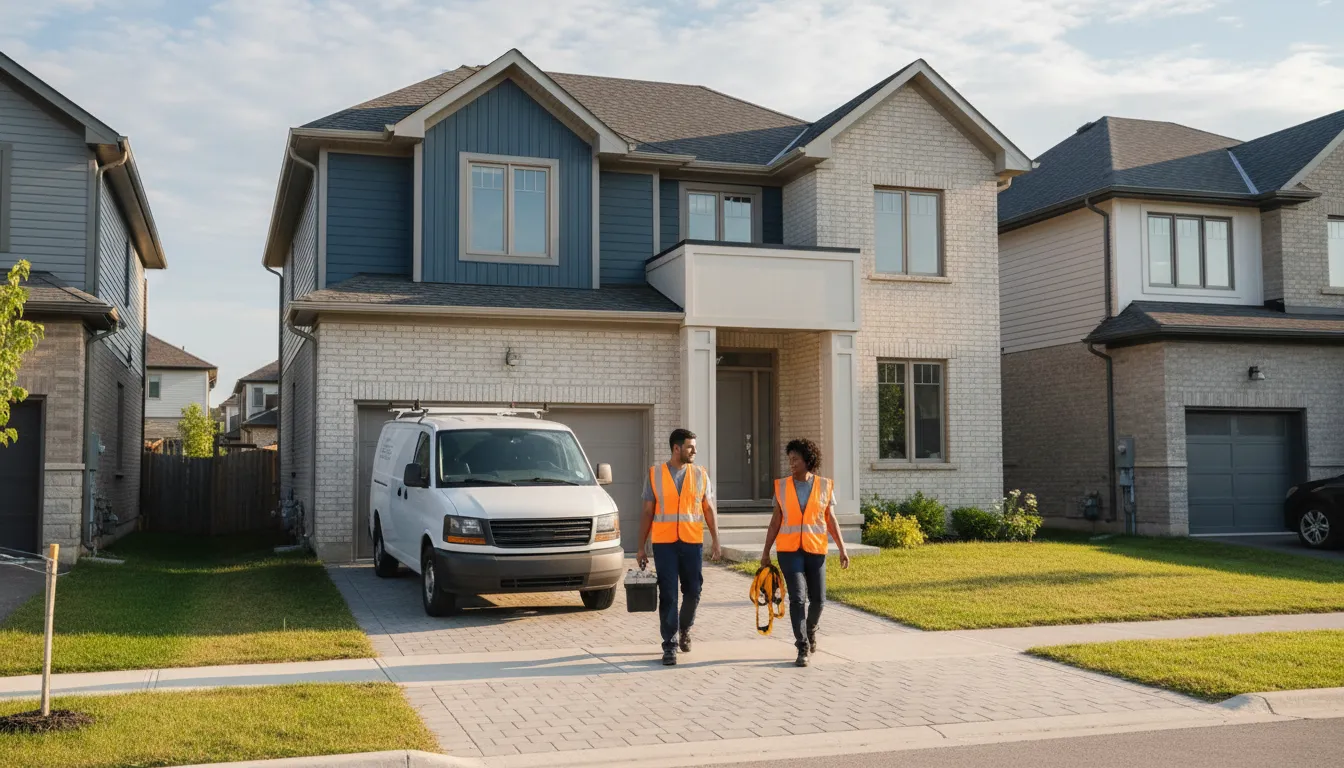
In tightly spaced subdivisions across Brampton and Mississauga, roofs are frequently shaded by adjacent structures for part of the day, which slows snow melt and prolongs moisture contact with shingles. Combined with soffit ventilation that was undersized at original construction, this creates a slow but steady failure mechanism: granule loss accelerates, sheathing retains moisture longer after each freeze-thaw cycle, and fastener corrosion sets in years before it would in a more exposed, better-ventilated home. Homeowners typically notice only the late-stage symptoms, such as a stain on a ceiling, by which point the deck itself may already need repair.
A Ventilation-First Diagnostic Approach
Rather than quoting a reroof on sight, we start by measuring net free ventilation area against the attic square footage and compare it to the current building code minimum. Where ventilation is inadequate, we specify the correction as part of the scope rather than as an upsell, because a new roof installed over an unventilated deck will fail on the same timeline as the one it replaced. Every recommendation is documented with the measurements behind it, sent by email, so you can review the reasoning before approving any work.
Why Peel Region Homeowners Choose Our Process
We treat roofing as a documented engineering exercise, not a sales conversation. Every step from inspection to final walkthrough is recorded and shared.
Deck-Level Inspection
We inspect from the attic side wherever access allows, not just the exterior, to catch problems a surface walk-through misses.
Written Failure Analysis
If we find a defect, we explain the mechanism that caused it, not just the symptom, so the fix addresses the root cause.
Code-Referenced Ventilation
Every ventilation recommendation cites the applicable ratio, so you know exactly why a change is proposed.
Material Transparency
Quotes list specific shingle lines, underlayment types, and fastening schedules, not vague product categories.
Seasonal Scheduling Discipline
We sequence work to avoid installing membrane systems outside their rated temperature range, protecting long-term adhesion.
Post-Install Documentation
You receive a written record of what was installed and where, useful for future maintenance or resale disclosure.
How a Peel Region Roofing Assessment Proceeds
The process is the same discipline whether the property is a Brampton townhouse or a Caledon estate; only the specifics of the scope change.
- 1
Email Intake and Photo Review
You send us your address and, where possible, photos of any visible issues. We use this to prepare an initial assessment before an on-site visit is scheduled.
- 2
On-Site Structural and Surface Inspection
We examine the deck, flashing, ventilation intake and exhaust, and fastening pattern, noting the housing era so our recommendations match the original assembly.
- 3
Written Scope and Quote
You receive a document outlining findings, the recommended repair or replacement, materials specified by name, and a firm price, all by email for your review.
- 4
Scheduled Installation
Work is scheduled around temperature windows appropriate to the specified membrane and shingle products, avoiding installs outside manufacturer-rated conditions.
- 5
Final Walkthrough and Records
We document the completed work with photos and a summary, giving you a record for warranty purposes or future resale.
Common Roof Failure Causes We See Across Peel Region
These are the mechanisms we most frequently trace back to a roof's early warning signs across Mississauga, Brampton, and Caledon.
Undersized Soffit Ventilation
Original construction in many 1960s-1980s subdivisions used ventilation ratios below what current practice recommends, accelerating deck moisture retention.
Ice Damming at Eaves
Poor attic insulation combined with freeze-thaw cycling causes meltwater to refreeze at the eave, backing up under shingles.
Flashing Fatigue Around Penetrations
Plumbing stacks and chimney flashing loosen over repeated thermal expansion and contraction, becoming a common leak point.
Granule Loss from Prolonged Shading
Roofs shaded by neighbouring structures retain moisture longer, wearing down shingle surfaces faster than sun-exposed sections.
Fastener Corrosion
Where original fasteners were undersized or improperly coated, moisture cycling leads to early corrosion and shingle blow-off.
Valley Wear from Drift Concentration
Roof valleys on steeper Caledon-area builds concentrate snow drift, wearing underlayment faster than open field areas.
Deck Delamination
Older plank decking can separate at the seams after years of moisture exposure, compromising fastener hold for new shingles.
Wind Uplift at Ridge and Edges
Improperly nailed ridge caps and edge courses are the first to fail in the region's seasonal thunderstorm wind events.
Peel Region Roofing Questions
Do you service all of Peel Region or just certain municipalities?
We work across Peel Region, including Mississauga, Brampton, and Caledon, adjusting our assessment approach to the housing era and exposure typical of each area.
How do freeze-thaw cycles specifically affect roofs in this region?
Repeated freezing and thawing causes water trapped in shingle layers, flashing seams, or deck material to expand and contract, gradually loosening fasteners and creating entry points for further moisture. Over several seasons this is one of the primary drivers of roof failure in Peel Region.
My Brampton subdivision home is showing a ceiling stain. Where do you start?
We start at the attic, tracing moisture paths back to their source rather than assuming the stain marks the leak location directly. Water often travels along rafters or sheathing before showing through drywall.
Do older Caledon properties need different ventilation solutions than newer Mississauga builds?
Often, yes. Older properties may have plank decking and minimal soffit intake, requiring a different retrofit approach than a newer OSB-decked home with engineered trusses. We assess each on its own construction details rather than applying a single standard fix.
How do you quote across such a large service area?
Every quote is based on an on-site inspection and documented in writing by email, regardless of which part of Peel Region the property is in, so the scope reflects the actual roof rather than a regional average.
Can you work around the region's severe summer storms?
We monitor forecasts and sequence installations to avoid exposing an open deck during storm windows, and we can pause or expedite work as conditions require.
5 regions across the GTA
Communities We Serve in Peel Region
Peel Region is highlighted below — every community has its own local page, and we cover the rest of the GTA too.
Request a Documented Roof Assessment for Your Peel Region Property
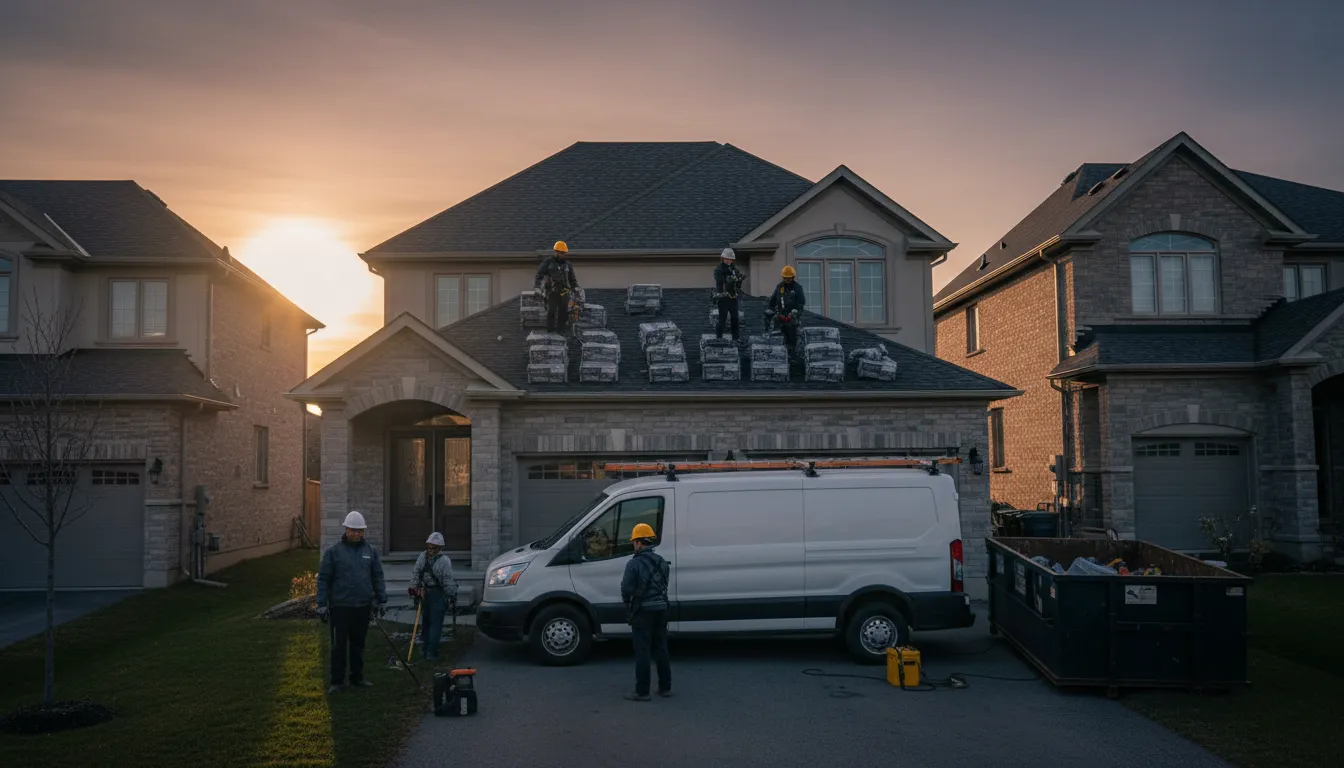
Email us your address and any visible concerns, and we'll prepare an inspection scoped to your home's construction era and exposure.
Email Us for a Free EstimateProudly Serving Peel Region, ON
Local, on-time service throughout Peel Region and the surrounding area.